Notes on the pieces
The document behind each piece — where it comes from, and why it matters. One study per piece.
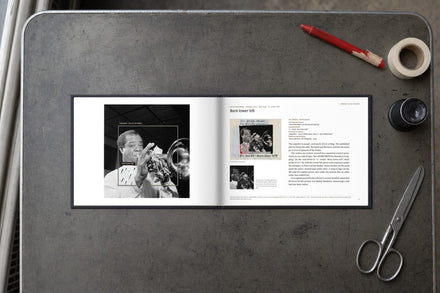
Burn lower left
In 1938 William P. Gottlieb traded hundreds of records for a Speed Graphic press camera. The choosing happened before the shutter was released. This is about...
Read the piece →
Why H is a note
Read in German, four notes spell his name. One of them is called H. Where that letter comes from is a thousand years old, and Bach...
Read the piece →
What the paper printed
In 1976 Helen Snyder gave a New York museum two hundred and ninety objects, nearly all of them Japanese dye stencils. Almost nothing is known about...
Read the piece →
The eleventh sheet
In November 1898 Félix Vallotton issued ten woodcuts in thirty copies. Then he sawed a piece out of every block and printed the ten pieces together...
Read the piece →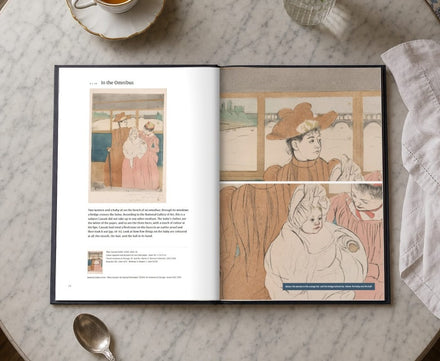
Before the colour
Mary Cassatt made ten colour prints in Paris in 1890–91. Some of them survive in earlier forms as well: a drawing, a drypoint with no colour...
Read the piece →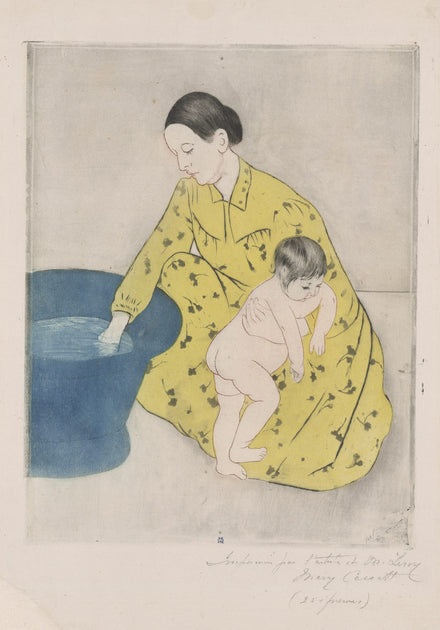
She called the first one an imitation
In 1891 Mary Cassatt hung ten colour prints in a side room at Durand-Ruel, because the society of printmakers had just put the word "French" in...
Read the piece →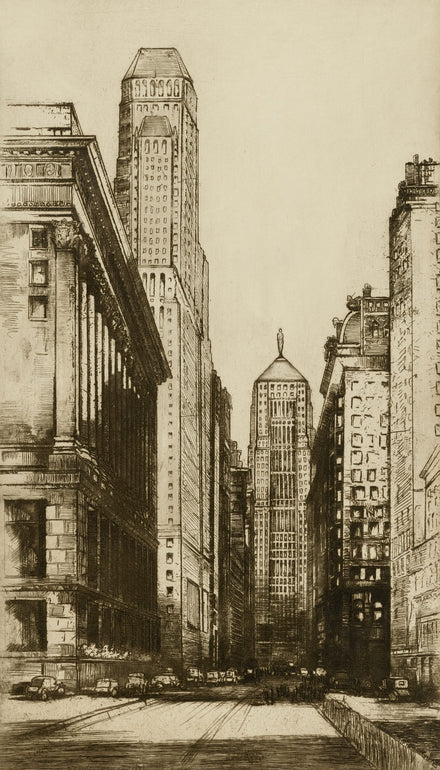
The only date is the one he cut himself
Twelve views of Chicago, made in a single year by a man who had spent thirty years etching Venice and Rouen. The museum that holds them...
Read the piece →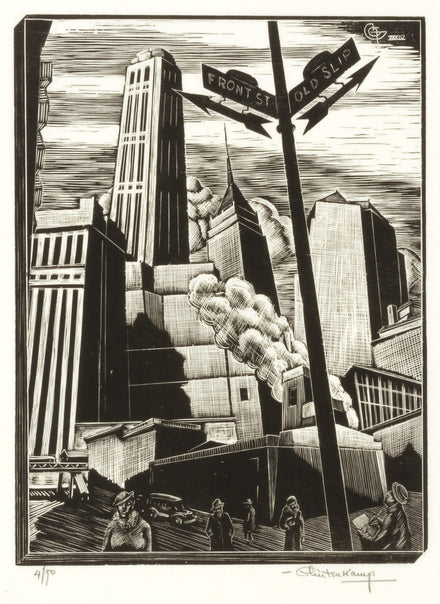
They all went down to the water
Eight prints of New York made between 1884 and the nineteen-thirties. Two of them stand three blocks apart, on the same stretch of the East River...
Read the piece →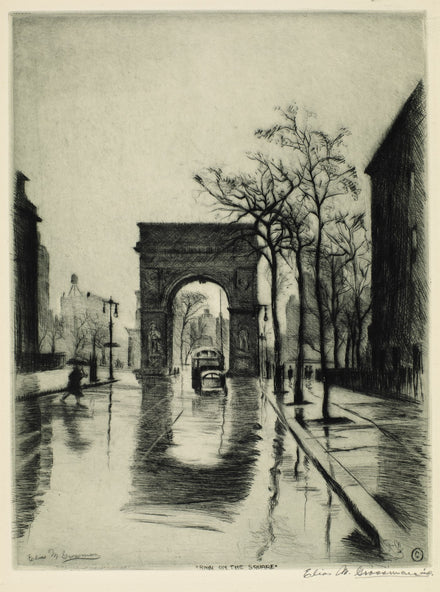
The New Deal paid for this street
Three etchings of Manhattan by a man born in Kobryn. One still carries the stamp of the federal programme that paid for it. Another he inked...
Read the piece →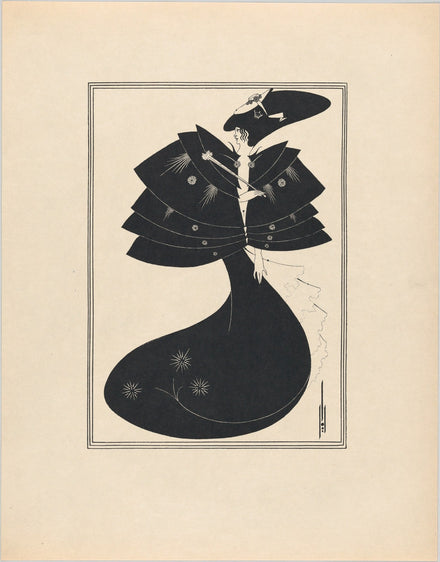
It illustrates nothing
The Black Cape is one of Beardsley’s illustrations for Wilde’s banned Salomé — except it illustrates nothing in the play. It is a dress: a single...
Read the piece →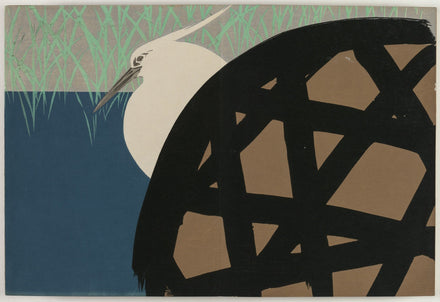
The last of the Rinpa
In 1901 the Japanese government sent Kamisaka Sekka to Glasgow. He met Art Nouveau there — a style Japan had helped invent — and brought it...
Read the piece →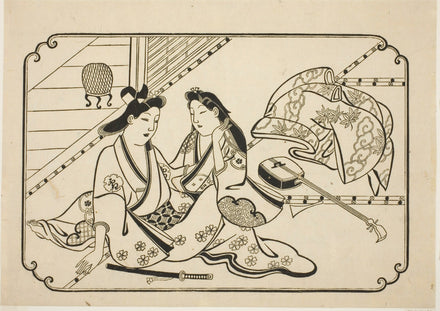
The line, before colour
Hishikawa Moronobu was the son of an embroiderer, and he began by drawing patterns for cloth. Three and a half centuries ago he gave ukiyo-e its...
Read the piece →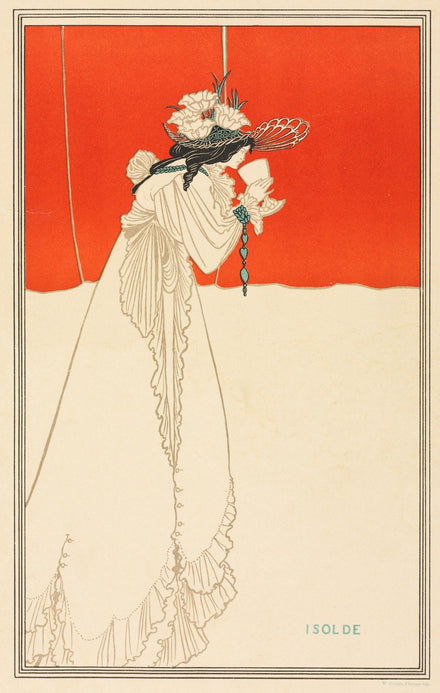
If I am not grotesque, I am nothing
Aubrey Beardsley made this in colour — rare for him — in 1895, near the end. It shows Isolde raising the potion. He was self-taught, tubercular,...
Read the piece →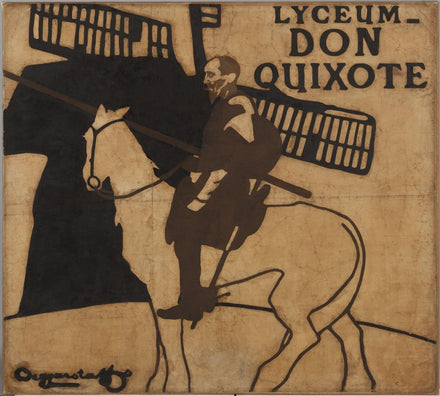
No more mills
In 1895 two young artists cut a Don Quixote out of black and brown paper for a theatre poster. Henry Irving took one look, said "No...
Read the piece →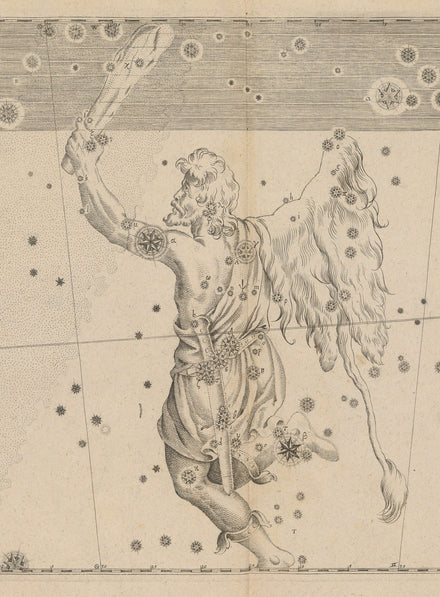
The stars still wear his letters
In 1603, six years before the telescope, a Bavarian lawyer drew an atlas of the whole sky and lettered its stars from Tycho Brahe’s measurements. We...
Read the piece →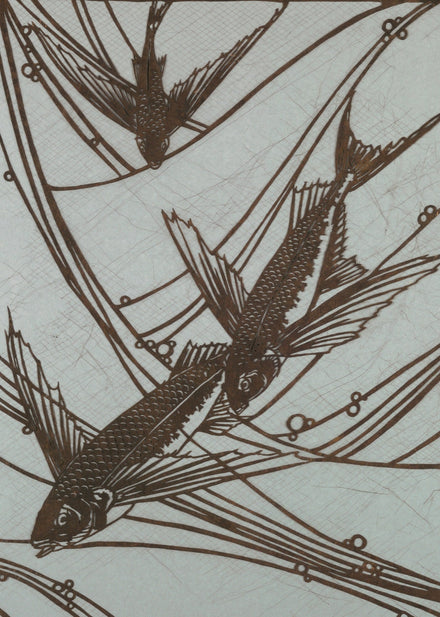
A stencil held together by silk
This is a katagami — a Japanese paper stencil, cut by hand and held together with a net of silk thread. It is the tool that...
Read the piece →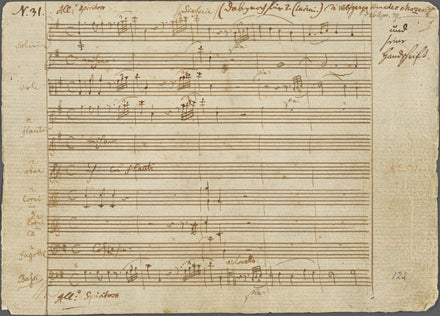
In his own hand
In April 1779 a twenty-three-year-old Mozart, home in Salzburg and chafing under an archbishop, wrote out an overture in his own hand and signed it. This...
Read the piece →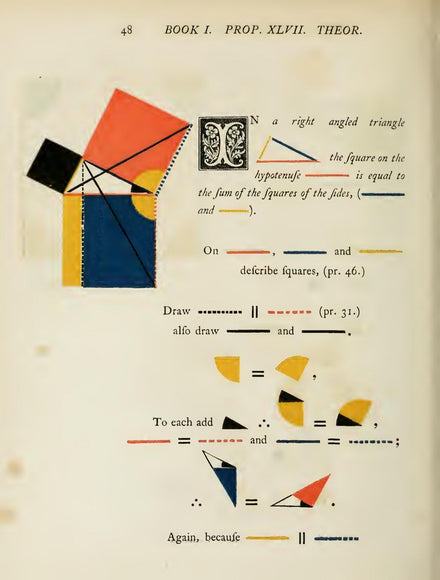
Euclid without letters
In 1847 an Irish engineer reprinted the first six books of Euclid with the letters torn out and pure colour put in their place. It bankrupted...
Read the piece →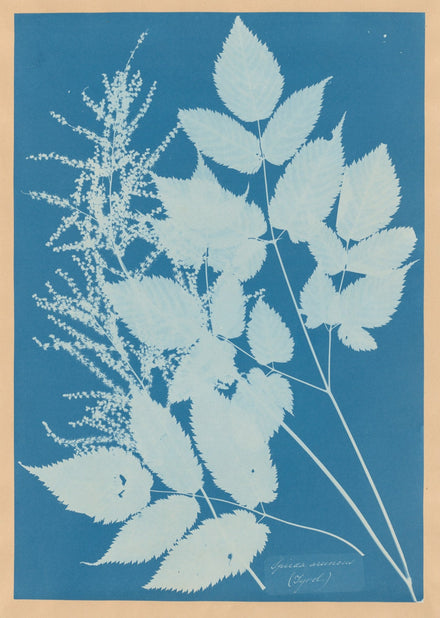
The plant printed its own shadow
Anna Atkins made a book of photographs without a camera, by laying plants on paper and leaving them in the sun. She signed it "A.A.", and...
Read the piece →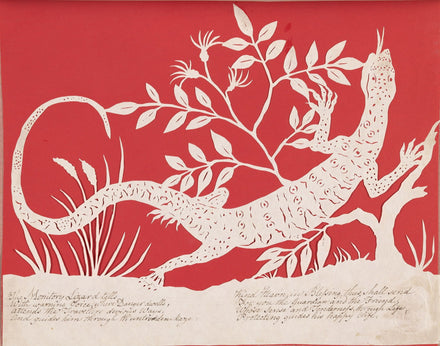
The lizard walks on her verse
For twenty years a poet in Ipswich cut some eighty valentines by hand every February — each one drawn from a hat, each one inscribed with...
Read the piece →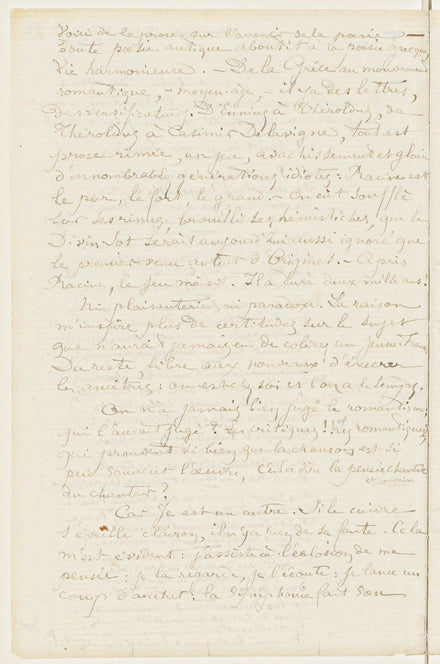
I is another
In May 1871 a sixteen-year-old wrote a letter that broke poetry in two. Weeks later he asked for it to be burned.
Read the piece →